
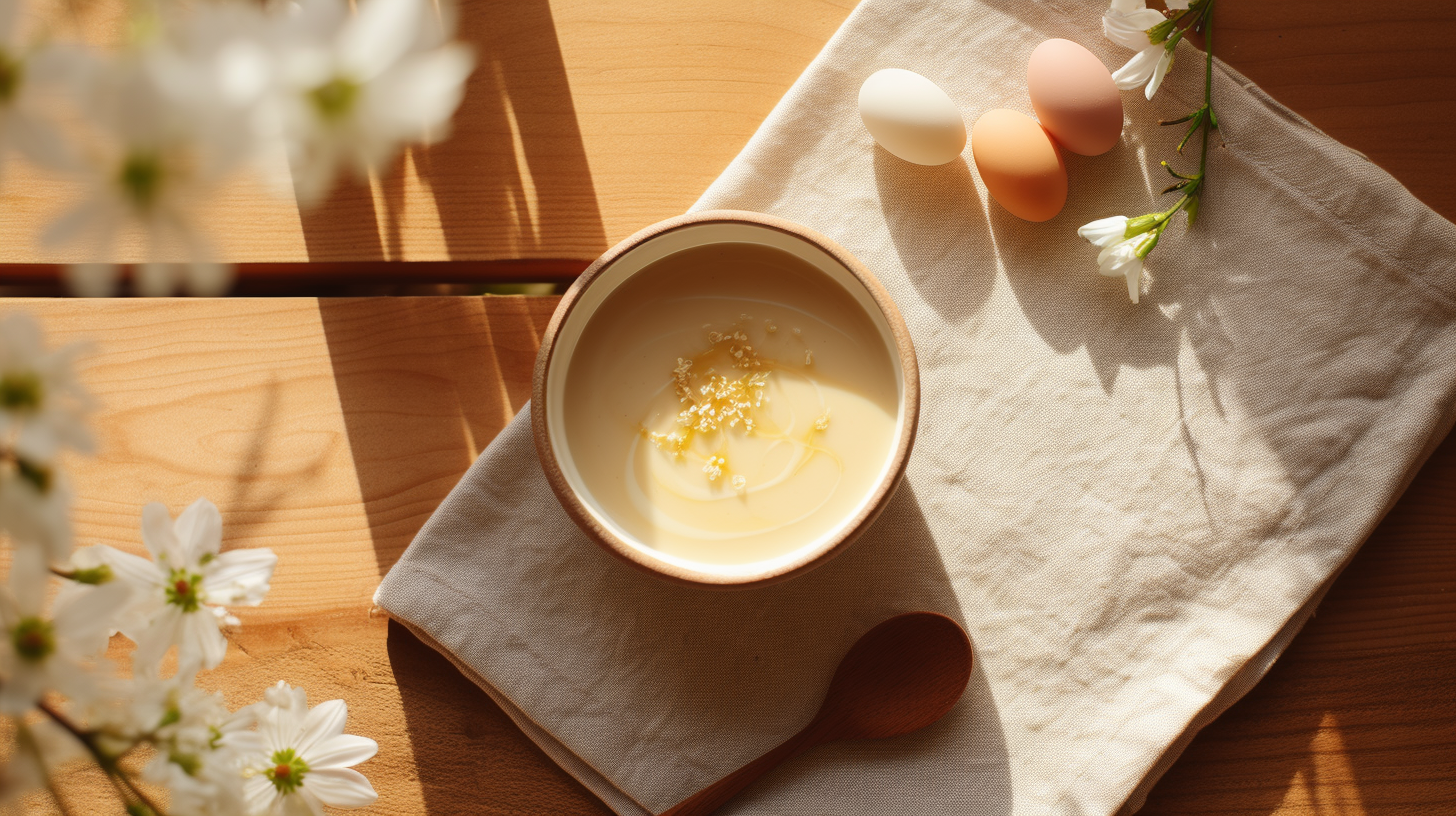
Making homemade Japanese mayo allows you to enjoy a creamy, rich, and slightly sweeter version of this beloved condiment, without any hidden nasties. Keep reading to learn how to make Japanese mayo from scratch – it’s easier than you think!
This homemade Japanese mayonnaise recipe, inspired by the popular Japanese Kewpie brand, is incredibly easy to prepare and is perfect for enhancing a wide range of dishes with its unique flavor (think potato salad, burgers, egg sandwiches… yum!).
It will keep in the fridge for about one week and we promise it’ll taste better than anything you can buy from your local Asian supermarkets!
Ingredients
1 large egg yolk, at room temperature
1 tablespoon rice vinegar (some people also use apple cider vinegar for an unconventional flavor)
1 teaspoon dijon mustard
1 teaspoon granulated sugar
1/4 teaspoon salt
1 cup neutral-flavoured oil (e.g., vegetable or canola oil)
1/4 teaspoon MSG (monosodium glutamate) optional, but it mimics the umami flavour found in commercial Japanese mayo
Directions
1. Prep Work: Ensure the egg yolk is at room temperature for better emulsification. Prepare all the ingredients and equipment needed before starting the process.
2. Blend the Base: In a mixing bowl, blender or food processor, whisk the egg yolk until smooth and slightly thickened. Add the rice vinegar, dijon mustard, granulated sugar, and salt to the egg yolk. Whisk together until well combined.
3. Emulsify the Oil: Slowly drizzle the oil into the egg yolk mixture while whisking continuously. Start with a few drops at a time to create a stable emulsion. As the mixture begins to thicken, you can gradually increase the speed of adding the oil while whisking until all the oil is incorporated.
4. Adjust Consistency and Flavour: If your homemade Japanese mayo is too thick, you can add a few drops of water or rice vinegar to achieve the desired consistency. Taste the mayo and adjust the seasoning to your liking. Add more salt, sugar, or dijon mustard for your preferred taste.
Optional: Add MSG (Monosodium Glutamate)
If you wish to replicate the umami flavour found in commercial Japanese mayo, you can add a pinch of MSG to the mixture. This step is entirely optional, and the mayo will still taste delicious without it.
Transfer and Store: Transfer the homemade Japanese mayo into a clean jar or container. Store the mayo in the refrigerator for up to one week. Homemade mayo tends to have a shorter shelf life compared to store-bought varieties, so it’s best to use it within the specified time.